
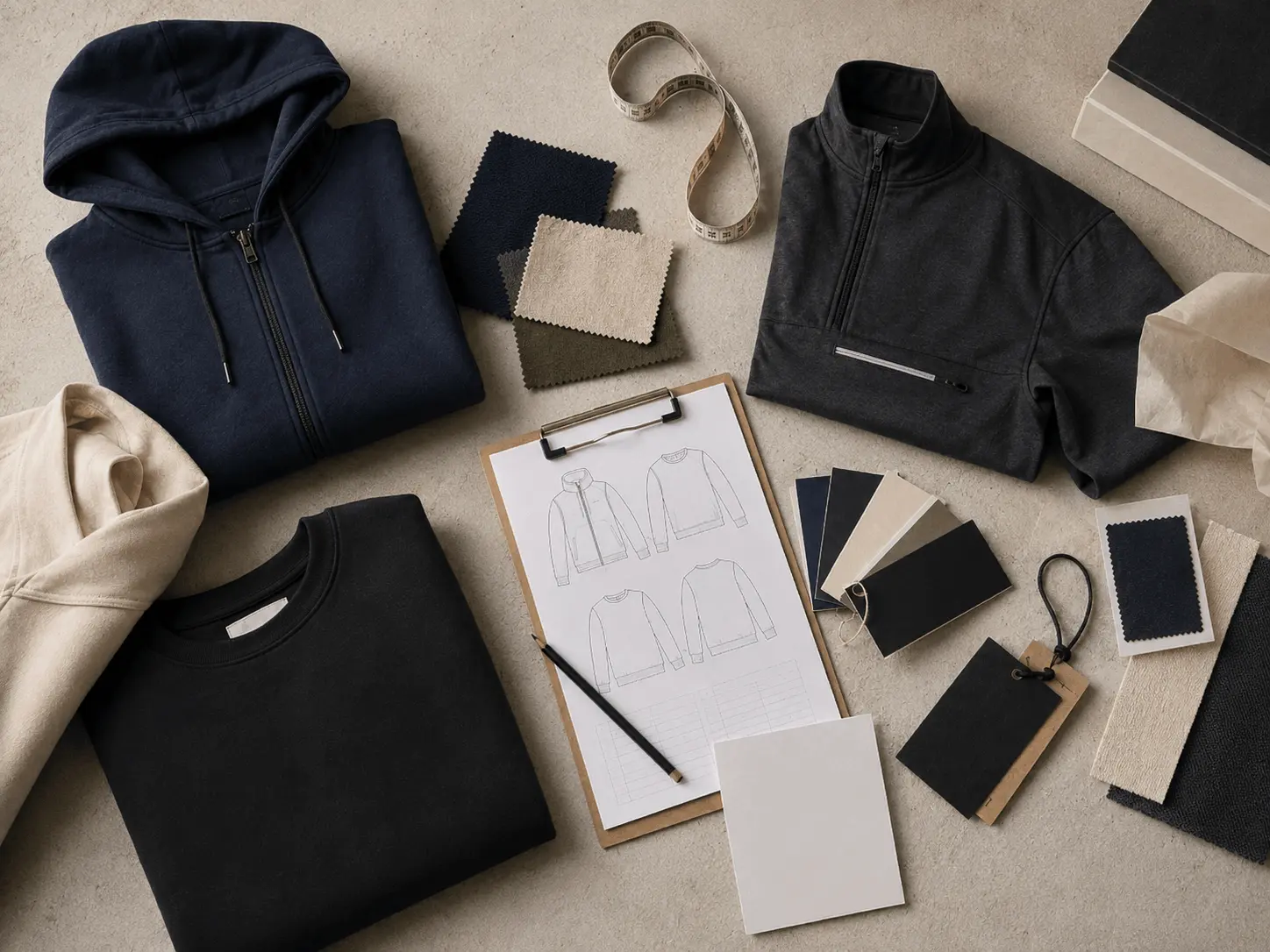
How to Choose the Right Apparel Manufacturer for Your Brand
Apparel sourcing can make or break a clothing business.
A strong design and good marketing are not enough if your manufacturer cannot maintain consistent sizing, fabric quality, production timelines, or communication.
For brands, wholesalers, and importers, the real challenge is not simply finding a factory — it is finding a manufacturing partner that can consistently deliver the same standard from sample development through bulk production.
At Drape Sports, we work with international buyers who need greater visibility and control over their apparel production process.
1. Look Beyond the Lowest Price
Price is important, but the cheapest quote is not always the most cost-effective option.
A lower initial price can quickly become expensive if the order results in:
- Inconsistent sizing
- Poor stitching
- Incorrect colours
- Production delays
- Rejected goods
- Expensive rework
- Missed retail seasons
Instead of comparing manufacturers only on unit price, buyers should evaluate the complete production value.
That includes quality control, communication, sampling accuracy, production capabilities, documentation, and reliability.
2. Verify What the Factory Actually Produces In-House
One of the most important sourcing questions is simple:
Who is actually manufacturing your order?
Some suppliers accept orders and then distribute different production stages across multiple subcontractors.
This can make quality, timing, and accountability harder to control.
Before placing an order, ask whether the manufacturer handles key stages such as:
Pattern Development:
Are patterns and size grading developed internally?
Cutting:
Is bulk fabric cut within the same production facility?
Sewing:
Does the manufacturer operate its own sewing lines?
Printing & Embroidery:
Which decoration processes are handled internally?
Inspection:
Who is responsible for final quality control?
At Drape Sports, patterning, cutting, sewing, decoration, and inspection are coordinated through our own manufacturing operation, helping buyers maintain greater visibility throughout production.
3. Evaluate Sampling Before Bulk Production
A sample tells you much more about a manufacturer than a sales presentation.
Before approving bulk production, evaluate:
- Pattern accuracy
- Garment fit
- Size proportions
- Fabric quality
- Stitching
- Seam construction
- Printing quality
- Embroidery quality
- Colour accuracy
- Overall finishing
Sampling also allows both the buyer and manufacturer to identify problems before hundreds or thousands of garments are produced.
A manufacturer that takes sampling seriously usually has a more controlled bulk-production process.
4. Check Their Communication Process
Poor communication is one of the biggest sourcing risks.
You should know what happens after the purchase order is confirmed.
Ask potential manufacturers:
- Who will manage your order?
- How often will you receive production updates?
- Will they send photos during production?
- How are changes documented?
- How quickly are problems reported?
- Who approves bulk production?
Clear communication reduces uncertainty and allows problems to be resolved before they affect the complete shipment.
At Drape Sports, production stages are structured so buyers can remain informed as their order moves from development into bulk manufacturing.
5. Understand Their Quality Control System
Quality control should not happen only when the garments are ready to ship.
A more reliable production process checks quality throughout manufacturing.
This can include:
Incoming Material Checks:
Confirming fabrics and trims before production.
Inline Inspection:
Identifying sewing or construction problems while garments are being produced.
Finishing Checks:
Reviewing decoration, measurements, trims, and garment appearance.
Final Inspection:
Evaluating the completed order before packing and shipment.
The earlier a problem is detected, the easier it is to correct.
For international buyers, clearly defined inspection procedures can significantly reduce sourcing risk.
6. Review Compliance and Documentation
Compliance becomes increasingly important as brands grow.
Retailers, distributors, and larger corporate buyers may eventually request documentation regarding factory working conditions, production practices, or supply-chain standards.
Drape Sports operates with BSCI and SEDEX auditing, providing buyers with additional manufacturing documentation when required for their sourcing process.
Compliance should therefore be considered early rather than becoming a problem when a major retail opportunity appears.
7. Understand MOQ and Production Capacity
A manufacturer should match the scale of your business.
A very large factory may not be suitable for a small startup, while a small workshop may struggle when your order volume increases.
Ask about:
- Minimum order quantity
- Sample quantities
- Monthly capacity
- Lead times
- Size ranges
- Colour quantities
- Reorder capability
- Peak-season availability
The right manufacturing partner should be able to support both your current requirements and reasonable future growth.
8. Confirm Shipping and Export Capabilities
Production is only part of the sourcing process.
International buyers also need to understand how finished goods will leave the factory.
Discuss:
- Packing requirements
- Carton specifications
- Export documentation
- Shipping terms
- FOB
- CIF
- DDP
- Freight coordination
- Retail-ready packing
Clarifying these details before production helps avoid unexpected delays once the order is complete.
Conclusion: Choose a Manufacturing Partner, Not Just a Supplier
Successful apparel sourcing depends on consistency, visibility, communication, and production control.
The right manufacturer should understand your specifications, identify problems early, maintain quality during bulk production, and communicate clearly throughout the order.
For brands, importers, and wholesalers, evaluating these factors before placing a large order can prevent many of the most common sourcing problems.
At Drape Sports, our manufacturing process brings pattern development, sampling, cutting, sewing, decoration, inspection, and export preparation together to provide buyers with a more controlled sourcing experience.
Looking for a Reliable Apparel Manufacturing Partner?
If you are developing sportswear, streetwear, or a private-label apparel collection, send us your tech pack, reference garment, or project requirements.
Get a Manufacturing Quote
Custom apparel manufacturing for global brands, wholesalers, and importers — from product development through production and export.
