
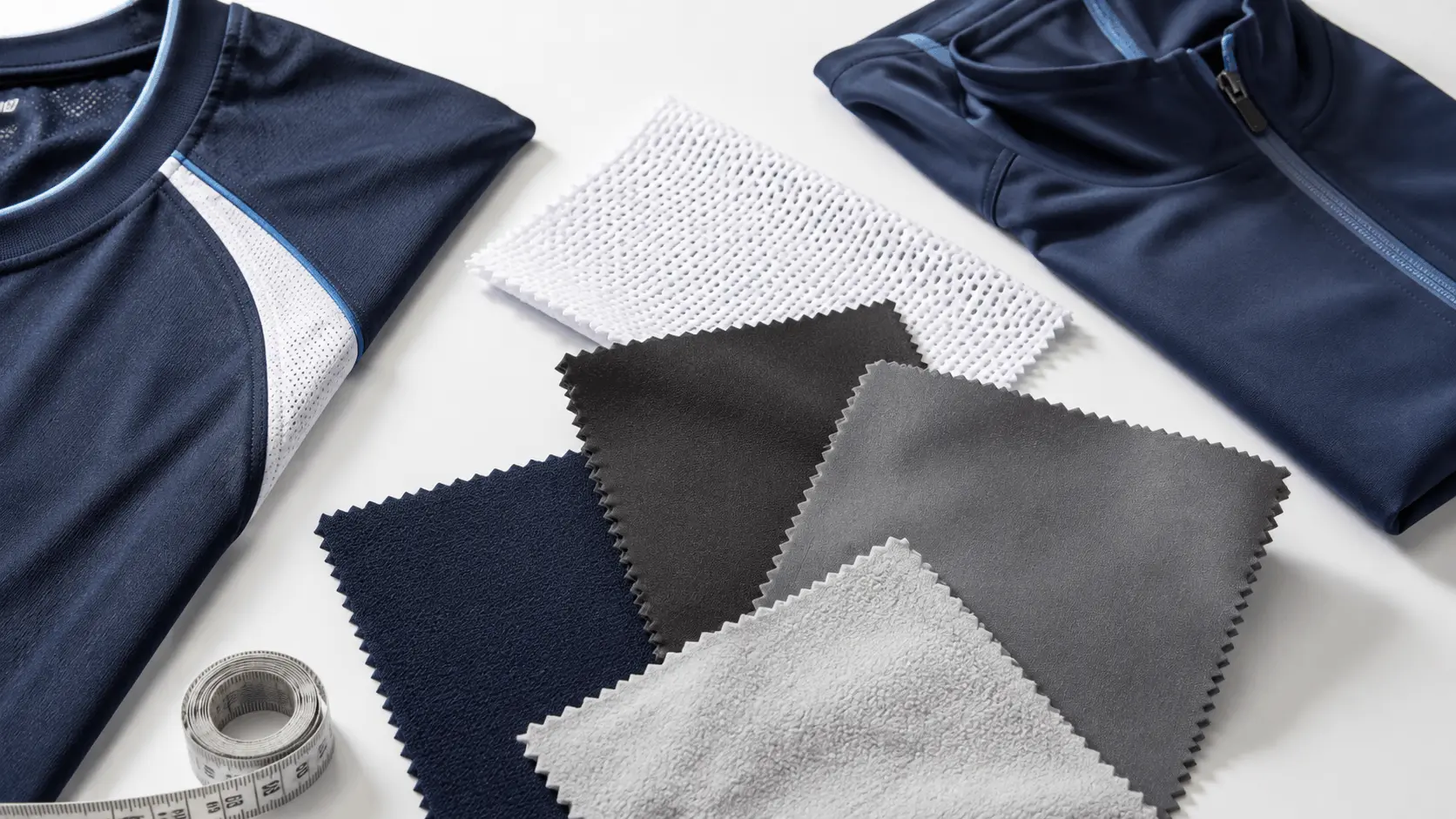
How to Choose the Right Sportswear Fabric for Your Brand
Choosing the right fabric is one of the most important decisions when developing a sportswear collection.
A garment can have a strong design, excellent branding, and a professional finish — but if the fabric does not match its intended use, the final product may fail to deliver the comfort, durability, and performance customers expect.
For sportswear brands, wholesalers, and importers, fabric selection should therefore happen before bulk production begins.
At Drape Sports, we work with buyers to develop sportswear around their required garment specifications, performance needs, branding, and production requirements.
2. Key Fabric Characteristics to Consider
Different sportswear products require different combinations of fabric properties.
Breathability
For training and high-intensity activities, breathable materials can help improve wearer comfort by allowing heat and moisture to move away from the body.
Moisture Management
Performance garments often need materials that help manage perspiration during physical activity.
This can be particularly important for jerseys, training tops, and activewear designed for extended use.
Stretch & Recovery
Sportswear needs to move with the wearer.
For garments such as sports bras, training pants, and fitted performance tops, appropriate stretch and recovery can contribute to a better fit and greater freedom of movement.
Weight
Fabric weight affects how a garment feels and performs.
Lightweight materials may be suitable for training tops and warm-weather products, while heavier fabrics can be more appropriate for hoodies, sweatshirts, and tracksuits.
Durability
Sportswear is frequently exposed to movement, washing, friction, and repeated use.
A suitable fabric should therefore be selected according to the expected workload of the finished garment.
3. Match the Fabric to Your Product
Once the performance requirements are clear, the fabric can be evaluated against the specific product.
Jerseys
Sports jerseys commonly require lightweight construction, comfortable movement, and effective moisture management.
The final choice should also account for the printing or decoration method being used.
Training Wear
Training garments need to balance comfort, movement, durability, and breathability.
Fabric selection should reflect the intensity and environment in which the garment will be used.
Sports Bras
Sports bras require careful consideration of stretch, recovery, support, comfort, and construction.
The fabric must work together with the garment pattern rather than being selected independently.
Tracksuits
Tracksuits can require a different balance of structure, warmth, durability, and comfort depending on the intended market and season.
Hoodies & Sweatshirts
For heavier garments, fabric weight, hand feel, construction, and durability become particularly important considerations.
4. Fabric Selection Should Work With Your Pattern
Fabric and pattern development should not be treated as two completely separate processes.
The behaviour of a fabric can influence how a garment fits and moves.
A stretch fabric may require different pattern considerations from a structured woven material. Similarly, fabric weight and drape can affect the appearance of the finished garment.
This is why an experienced pattern room can play an important role during sportswear development.
At Drape Sports, our in-house pattern makers develop and grade blocks according to the requirements of the garment and the buyer’s specifications.
The goal is to bring the physical sample closer to the intended design before bulk production begins.
5. Test Before Bulk Production
One of the most important rules in apparel manufacturing is simple:
Do not rely on assumptions when you can test the product.
Before approving bulk production, buyers should evaluate the physical sample and consider:
- Fit and movement
- Fabric hand feel
- Colour appearance
- Stretch and recovery
- Stitching and construction
- Printing or embroidery quality
- Overall garment appearance
- Performance for the intended application
For colour-sensitive products, lab dips can also be reviewed before bulk fabric production moves forward.
At Drape Sports, our production workflow includes physical sampling and colour approval before the order progresses into bulk production.
6. Think Beyond the Fabric
Fabric is important, but it is only one part of the finished garment.
The final result also depends on:
Pattern Development:
A good fabric still needs an accurate pattern and grading system.
Construction:
Stitching, seams, panels, and finishing all influence garment performance.
Decoration:
Sublimation, printing, embroidery, and other branding methods need to be compatible with the garment.
Quality Control:
The finished product needs to be inspected before it reaches the buyer.
This is why working with a manufacturer capable of handling multiple production stages can simplify the development process.
Conclusion: The Right Fabric Starts With the Right Requirements
There is no single “best” sportswear fabric for every product.
The right choice depends on the garment, activity, climate, fit, performance requirements, brand positioning, and production method.
For global sportswear brands, the best approach is to define these requirements first, develop the appropriate sample, evaluate the physical garment, and only then move toward bulk production.
At Drape Sports, we support buyers through pattern development, sampling, fabric and trim coordination, cutting, sewing, decoration, inspection, and export preparation — helping turn a sportswear concept into a production-ready garment.
Ready to Develop Your Next Sportswear Product?
Whether you are developing a new jersey, training collection, tracksuit, sports bra, performance top, or complete private-label range, share your requirements with our team.
Get a Quote for Your Sportswear Collection
Custom sportswear manufacturer — helping global brands develop and produce performance apparel with controlled manufacturing, reliable quality, and professional production support.
